
Rewiring an Old House in Spain: When and How
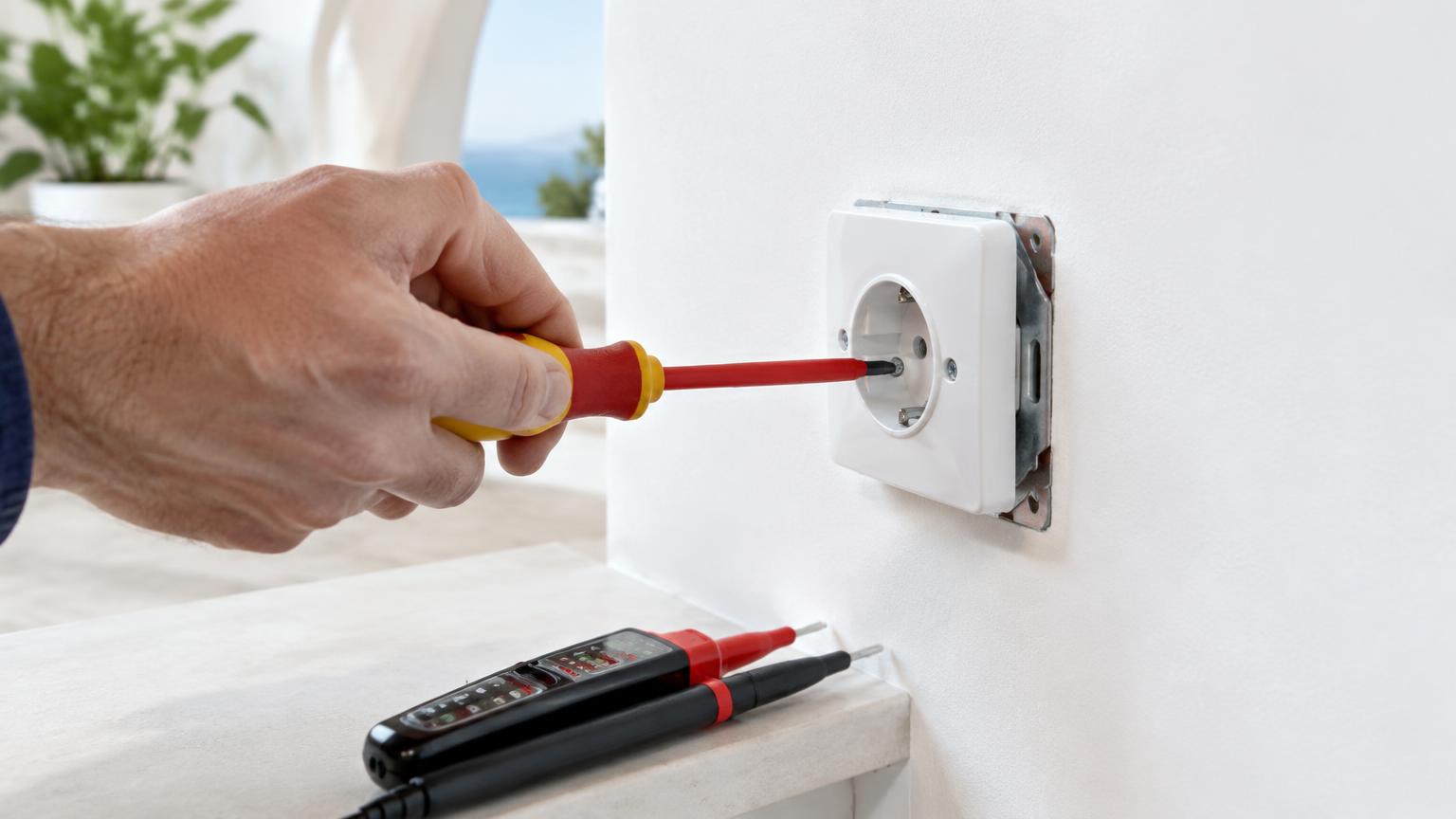
An older home may need rewiring if its cables are deteriorating, safety measures are inadequate or the installation no longer suits everyday use. Age alone does not settle the question: a qualified inspection should establish whether targeted repairs are sufficient or a complete replacement makes more sense.
For homeowners on the Costa del Sol, the key is to agree the electrical work, building repairs and paperwork together. This guide explains the warning signs, planning decisions and indicative costs, plus what to ask an authorised installer before work starts.
Warning signs your electrical installation needs attention
There is no universal expiry date for household wiring. Its condition depends on the original installation, maintenance and later alterations. A recently decorated flat can still have old cables behind the walls, while replacement sockets reveal little about the wiring supplying them.
Arrange an inspection if you notice:
- Hot sockets, dark marks or a burning smell.
- Tingling or electric shocks when touching appliances.
- Repeated tripping of circuit breakers or the residual current device, known locally as the diferencial.
- Persistent flickering lights or crackling connections.
- Damaged cable insulation, improvised joints or permanent reliance on extension leads.
Repeated tripping can also indicate a faulty appliance rather than a need to rewire the whole property. Never bypass a protective device or fit a higher-rated breaker simply to stop it tripping.
If there is smoke, sparking or significant overheating, stop using the affected area. Disconnect the supply only if this is safe and seek urgent assistance. For a fire, call 112 and never use water.
What an authorised installer should inspect
Start with an authorised electrical installer, rather than asking for a price based only on the number of bedrooms. A useful assessment looks beyond visible fittings and includes the measurements needed to establish whether the installation is safe.
The inspection should consider:
- The consumer unit, protective devices and circuit arrangement.
- Cable condition, conductor sizes and identification.
- Protective conductor continuity and earthing arrangements.
- Insulation condition and residual current device operation.
- Accessible junction boxes, connections and cable routes.
- Existing demand and planned additions.
Provide any previous certificates, drawings or renovation records. Explain whether you intend to add air conditioning, replace gas cooking with electric appliances or install electric vehicle charging.
In an apartment block, a problem may involve shared electrical infrastructure rather than just your flat. The installer should identify that distinction and explain whether the community of owners needs to become involved.
Ask for a written assessment separating urgent defects, recommended improvements and components that can safely remain. This creates a clearer basis for comparing quotes.
Choosing between partial repairs and a complete rewire
A limited upgrade can be sensible when the remaining installation has been checked and is in good condition. Replacing a defective circuit or correcting a localised problem may be enough, provided the retained wiring and new work are compatible.
A complete rewire becomes more attractive where deterioration is widespread, protective conductors are extensively missing, circuits are inadequate or successive alterations are difficult to verify. It is also worth considering during a major renovation, before walls are finished and new flooring is laid.
A new consumer unit is not the same as a new electrical installation. It does not repair damaged cables, poor connections or earthing defects elsewhere.
Existing conduits may be reusable, but only after their condition, capacity and routes have been checked. Surface-mounted trunking can sometimes reduce wall chasing, with an obvious visual compromise.
In Spain, new installations and extensions to an installation require an authorised installer and an electrical installation certificate, commonly called a boletín, under the REBT framework. For other refurbishment work, ask the installer to confirm the documentation and procedures required for the proposed scope.
Planning sockets, materials and the practical details
Draw a simple room plan showing furniture, appliances and how each space will be used. This is more helpful than choosing an arbitrary number of sockets per room and can prevent awkward extension leads after decorating.
- Mark existing lights, switches and sockets.
- Add requirements for cooking, cooling and home working.
- Identify likely future additions.
- Review bathroom and damp-area fitting positions with the installer.
- Agree routes and finishes before work begins.
Materials may include cables, conduit or trunking, boxes, switches, sockets, a consumer unit and protective devices. Cable sizes and protection ratings need proper design, not selection from a generic online shopping list.
For your own planning, a tape measure, photographs and a floor plan are enough. The installer needs suitable insulated tools and test instruments for voltage, insulation and protective devices, among other checks. A neon test screwdriver is not a substitute for professional verification that a circuit is dead.
A useful practical tip: agree who moves furniture, protects floors, closes wall chases and repaints. These tasks can otherwise fall between separate contractors.
How the work progresses and essential safety precautions
The sequence depends on access and whether the property remains occupied, but a typical project involves:
- Confirming the scope, point locations and planned outages.
- Protecting the property and preparing building work.
- Removing or safely taking redundant components out of service.
- Installing cable routes, wiring, the consumer unit and fittings.
- Completing inspections and testing before energising.
- Providing the relevant documentation and finishing agreed repairs.
Before any intervention, the power must be switched off at the consumer unit, accidental reconnection prevented and absence of voltage checked with a suitable detector. Its operation should be verified before and after testing. This is a task for someone competent, not an invitation to investigate live wiring yourself. Solar panels, batteries or other supplies can require additional isolation.
Do not open electrical boxes to identify conductors or attempt live work. If gas pipes are encountered, leave them untouched: gas work is never a DIY task and requires an appropriately authorised professional.
Ask for photographs before cable routes are covered. Plan outages around refrigerated food, access arrangements and any medical equipment that depends on electricity.
Indicative rewiring costs and comparing quotations
As a broad guide, replacing the internal electrical installation in a medium-sized flat might cost €3,000–€7,000. Larger homes, extensive specifications or difficult cable routes may fall around €7,000–€12,000 or exceed that range. A limited upgrade might be approximately €600–€2,500, depending on its scope.
These are indicative ranges, not offers. Prices vary with specification, existing condition and location, including across the Costa del Sol. Do not assume they include plastering, painting, taxes, certification or alterations to shared building infrastructure.
Request quotations that clearly identify:
- Proposed circuits and the number and location of electrical points.
- The consumer unit, protection, fittings and cable containment.
- Removal of old components, waste disposal and property protection.
- Wall chasing, making good, painting and other finishing work.
- Testing, the boletín where required, and taxes.
- Exclusions, estimated scheduling and the process for unexpected work.
The common mistake is comparing headline totals for different scopes. A cheaper quotation may leave substantial finishing work to you. Agree in writing how additional work will be priced and approved before it is undertaken.
When to bring in a professional
Contact an authorised installer for signs of overheating, electric shocks, damaged wiring or recurring protection failures. Professional advice is also needed before adding circuits, altering the consumer unit or connecting equipment that requires changes to the installation.
You can map out your requirements, clear rooms and choose visible finishes. However, replacing wiring or a consumer unit is not a suitable DIY renovation project. Safety relies on design, workmanship and the verification that follows, not simply whether the lights come on.
At handover, request clear circuit labels, verification results and the applicable documentation. Keep photographs of concealed routes and ask the installer to explain the protective devices and any user checks specified by their manufacturers.
If your property is on the Costa del Sol, ReformaClick can help you find renovation companies and request a quotation without obligation. Describe the property size, known electrical problems and whether you also need plastering and decorating, so the proposed work can be defined more clearly.
Frequently asked questions
Can a Spanish home be rewired without chasing the walls?
Sometimes existing conduits can be reused, or surface trunking can provide an alternative. It depends on their condition, capacity and route. An installer must check feasibility rather than assume all cables can simply be pulled through.
How often should a house be rewired?
There is no single age at which every home requires complete rewiring. Condition, professional testing and current usage matter more. If the installation history is unknown, arrange an inspection before deciding on the scope.
Can I stay in the property during a rewire?
It may be possible if the work can be staged, but expect outages, dust and restricted access. Moving out temporarily can be more practical during a complete rewire. Agree safe occupancy arrangements before work starts.
Will I need a new boletín after electrical work?
New installations and extensions require an authorised installer and a boletín under Spain’s REBT framework. Requirements for other refurbishment depend on its scope and the applicable procedures. Ask the installer to confirm what is needed and included in the quotation.
Would you rather hire a professional?
Tell us about your project and we will connect you with renovation companies on the Costa del Sol. No obligation.
Get a quote