
How to Change a Plug Socket Safely, Step by Step
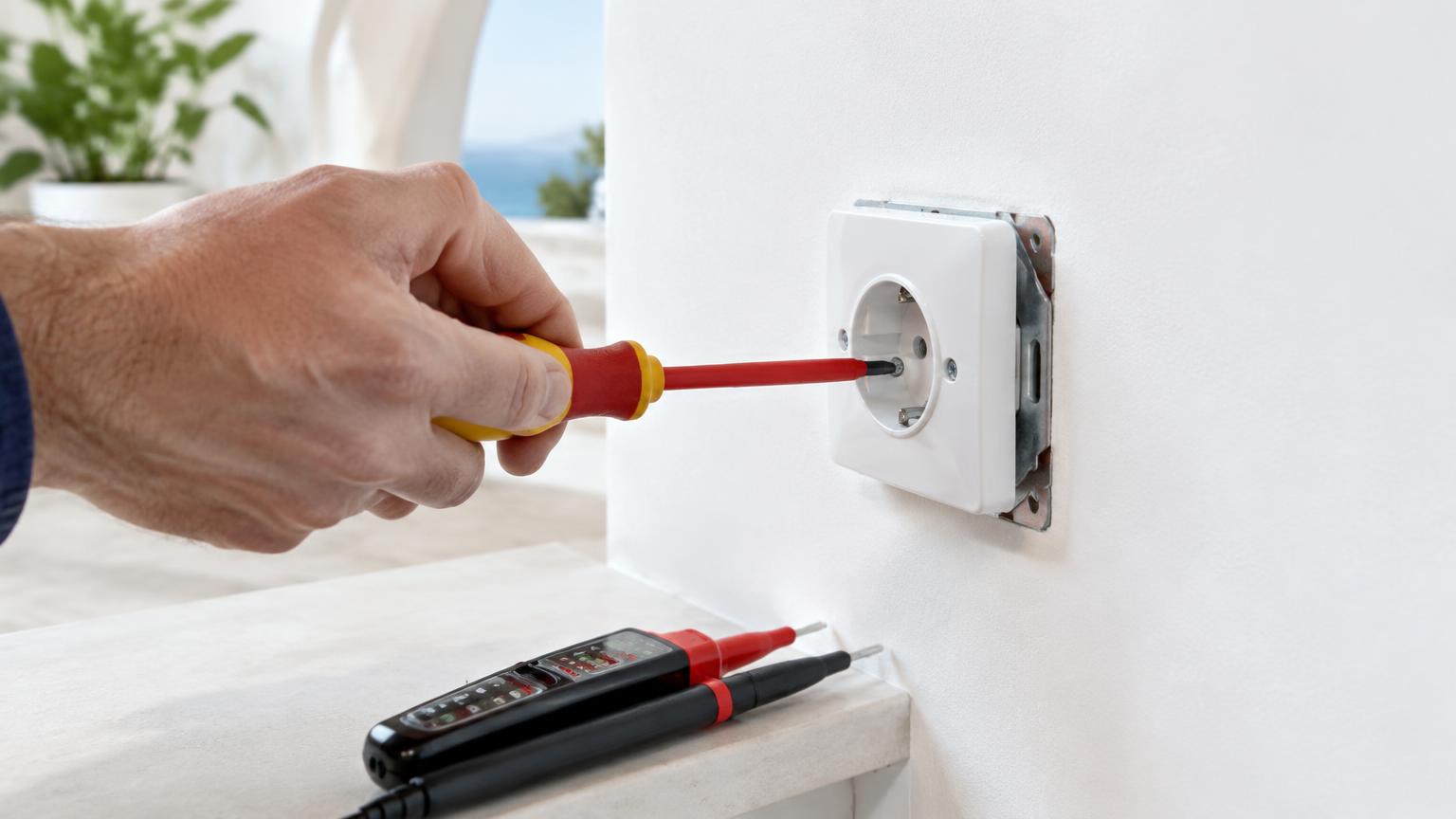
Wondering how to change a plug socket in your Costa del Sol home? Replacing an existing wall socket is different from moving it or adding a new outlet. A straightforward replacement may be manageable for someone with suitable experience, but only when the wiring is sound, the connections are understood and the supply can be safely isolated and tested.
The essential first step is to switch off the electricity at the consumer unit and prove the socket is dead with a suitable voltage tester. A wall switch or a lamp that no longer lights is not proof. Burnt wiring, a missing earth or unfamiliar connections are reasons to stop and call an electrician.
1. Decide whether a replacement is the right solution
This guide covers a wall socket outlet, not the plug fitted to an appliance lead. Start by looking at the socket without removing its cover or inserting anything into it.
- A cracked decorative cover may only need a compatible replacement part.
- A socket that no longer grips plugs securely may need a new mechanism.
- Repeated sparking, scorch marks, a burning smell or unusual heat require professional investigation.
- A tripping circuit breaker does not necessarily mean the socket itself is faulty.
Stop using any socket showing signs of overheating. Isolate its circuit if you can do so safely and arrange an inspection. Damage can extend into the wall box or along the cable.
Moving a socket, adding an outlet or altering its circuit goes beyond a like-for-like replacement. In Spain, new installations and extensions require an authorised installer and an electrical installation certificate, commonly called a boletín, under the REBT electrical regulations.
2. Gather compatible materials and suitable tools
Have everything ready before switching off the supply:
- A replacement socket compatible with the wall box, frame and circuit requirements.
- Insulated screwdrivers with the correct tips.
- A suitable two-pole voltage tester, used according to its instructions.
- Wire strippers, only if conductor ends need preparing and you know how to do this correctly.
- A battery-powered torch, compatible fixing screws and a phone for reference photographs.
Do not rely solely on a neon screwdriver or non-contact voltage pen to prove a circuit is dead. Household gloves are not reliable electrical protection either.
For a Spanish property, choose a socket appropriate to the local installation rather than assuming a British accessory will fit. Check the mechanism, support and decorative frame as a complete compatible combination.
A replacement with earth contacts must have a proper protective-earth connection. Fitting an earthed-looking socket does not create an earth where the installation has none. Never use the neutral conductor as a substitute.
3. Isolate the supply and prove the socket is dead
Clear the work area, keep your hands and the floor dry, and keep children and pets away. Unplug anything connected to the socket before starting.
- Identify the circuit at the consumer unit and switch off its circuit breaker. If you cannot confidently identify it, switch off the main switch.
- Tell everyone in the property and prevent anyone from switching the supply back on.
- Prove your voltage tester works using a proving unit or a known live source, following the manufacturer's instructions.
- Check for absence of voltage at the socket. Once the cover is removed, test the accessible terminals and conductors before touching or moving them.
- Prove the tester still works after completing the checks.
Testing must cover the relevant combinations of conductors, not just one socket contact. If you do not know how to carry out safe isolation and testing, leave the job to an electrician.
Solar panels, battery systems or other supplies can complicate isolation. Do not assume a single switch necessarily isolates every possible source in such a property.
4. Remove the old socket and inspect the wiring
Only after proving the supply is dead should you remove the frame and loosen the fixing screws. Ease the mechanism out gently without pulling on the wires. Take a clear photograph before disconnecting anything.
A photograph is a useful record, but the previous connections may not have been correct. Never treat them as proof of safe wiring.
In modern installations, green-and-yellow identifies the protective earth, blue normally identifies neutral, and brown, black or grey may identify a live conductor. Older or altered wiring may not follow the expected colours. Do not identify conductors by colour alone.
Look for brittle insulation, darkened copper, moisture or distorted terminals. Stop if you find any of these warning signs.
Multiple conductors with an unclear purpose, wires too short to reconnect safely or a loose wall box also warrant professional attention. Simply cutting back a burnt end may leave too little cable and will not establish how far the damage extends.
5. Connect the replacement and refit the socket
Proceed only if the conductors are positively identified, undamaged and suitable for the new accessory. Keep the electricity isolated throughout.
- Release the wires from the old mechanism using its intended terminal-release method. Do not pull them out by force.
- Read the new socket's instructions for stripping length, accepted conductor types and terminal capacity.
- Connect the protective earth to the terminal marked with the earth symbol. Connect live and neutral according to the manufacturer's markings and diagram, where provided.
- Check that no bare copper remains exposed outside a terminal and that insulation is not trapped in the electrical contact. Do not put multiple wires into a terminal unless it is designed for them.
- Tighten screw terminals to the specified torque where given, and gently check that each conductor is secure.
- Fold the wiring back without straining it, secure the mechanism and fit the cover and frame.
Never bridge neutral and earth. Twisting wires together and wrapping them in tape is not an acceptable repair for a defective connection.
The finished socket should be firm, with no trapped conductors or accessible electrical parts. Do not restore power while the mechanism is exposed.
6. Check the result and avoid common mistakes
Once the socket is fully enclosed and tools are clear, restore the supply. If a protective device trips, switch off again and do not repeatedly reset it. If everything appears normal, check basic operation using a known-working, low-power appliance.
This functional check does not verify earth continuity or certify circuit safety. Plug-in socket testers also have limitations. Full electrical verification needs appropriate instruments and professional knowledge.
Common mistakes include:
- Working live because the task seems minor.
- Copying old connections without understanding them.
- Overtightening screws and damaging the accessory.
- Covering scorch marks with a new faceplate.
- Using an adaptor to compensate for a loose socket.
If you notice unusual heat, noise, a smell or intermittent operation, stop using the outlet and isolate the circuit.
For budgeting, a standard domestic socket mechanism might cost €5–€35. A straightforward professional replacement including basic materials and travel might be €60–€150. These are indicative ranges, varying with quality, existing condition and location. Emergency attendance, fault-finding and additional repairs can increase the cost.
7. When to call a professional electrician
Call an electrician if you cannot prove the circuit is dead, identify the conductors or make secure, correct connections. Missing earthing, damp, heat damage, recurring trips and ageing wiring also need expert assessment.
Bathrooms, outdoor areas and locations close to water need particular care. A protective cover alone does not make a socket suitable: its position and the installation's protective measures matter. Coastal humidity and corrosion deserve attention in Costa del Sol properties.
Ask for a quote covering travel, materials, labour, taxes and testing. For extra sockets or a new installation, use an authorised installer and confirm the certification and boletín requirements under Spain's REBT regulations. Do not assume British electrical procedures or paperwork apply unchanged in Spain.
If your property is on the Costa del Sol, ReformaClick can help you find renovation companies and request a no-obligation quote. Describe the symptoms and provide photographs of the socket's exterior and consumer unit without opening either.
Frequently asked questions
Can I change a plug socket without turning off the power?
No. Isolate the supply at the consumer unit, prevent accidental reconnection and prove the circuit is dead with a suitable voltage tester. Switching off or unplugging the appliance does not isolate the socket wiring.
What if there are only two wires behind the socket?
Do not assume their functions or create a link to imitate an earth connection. An electrician should assess the circuit and establish the necessary protection. A socket with earth contacts cannot compensate for a missing protective conductor.
Can I replace a single socket with a double socket?
It depends on the wall box, accessory, wiring and circuit capacity. Two outlets do not increase the power available from the circuit. Get professional advice if the change requires altered connections or an extension to the installation.
Do I need a boletín to replace a socket in Spain?
A like-for-like accessory replacement does not normally require a new boletín on its own. New installations and extensions require an authorised installer and certification under the REBT. The electrician should confirm the documentation needed for the actual scope of work.
Why does my plug socket get hot?
Possible causes include loose contacts, wear, overloading or a damaged connection. Stop using a socket that becomes unusually hot and isolate its circuit. Replacing the decorative cover will not address the underlying fault.
Would you rather hire a professional?
Tell us about your project and we will connect you with renovation companies on the Costa del Sol. No obligation.
Get a quote