
RCD Keeps Tripping? How to Find the Electrical Fault
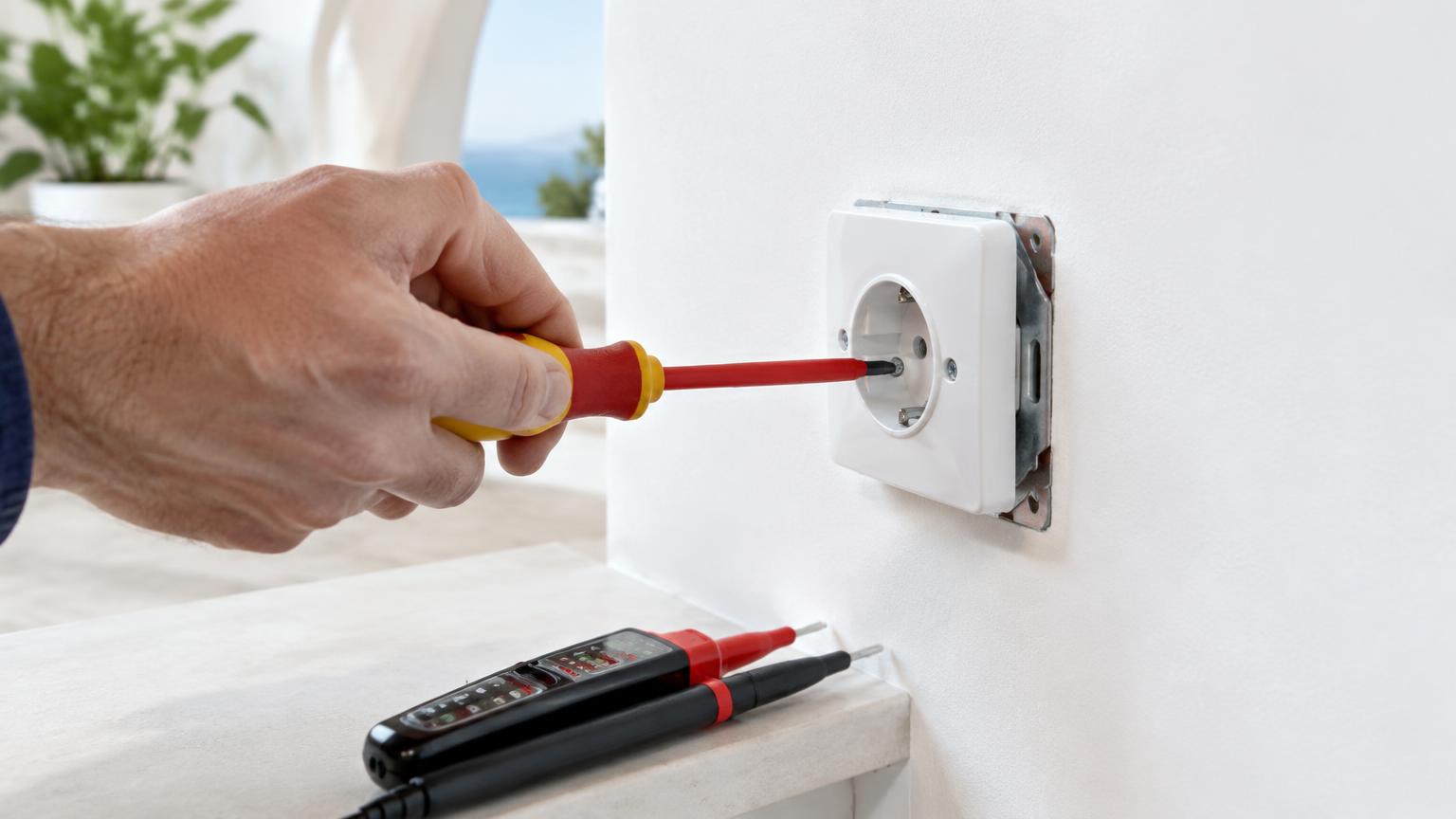
If your RCD keeps tripping, it is usually detecting current leaking along an unintended path. A faulty appliance, moisture, damaged insulation or several small leakage currents adding together can all be responsible. A trip does not automatically mean the RCD itself needs replacing.
You can narrow down the problem using accessible consumer-unit switches and unplugging appliances, provided everything is dry and undamaged. Do not remove covers or touch wiring. If you notice water, burning smells, sparks or a tingling sensation from an appliance, stop investigating and contact an electrician.
1. Check which protective device has actually tripped
Start by identifying the device that has switched off. In Spain, the consumer unit is commonly called the cuadro eléctrico, and an RCD is an interruptor diferencial.
- RCD: usually has a button labelled “T” or “Test”. It detects an imbalance associated with current leakage and helps protect against electric shock.
- Circuit breaker or MCB: protects a circuit against overloads and short circuits. Labels may refer to lighting, sockets, kitchen equipment or air conditioning.
- Main protection or power-limiting control: may disconnect the supply for another reason, including excessive demand.
Some devices combine functions, so a test button is a useful clue rather than a complete identification. If the labels are unclear, photograph the closed front of the unit for an electrician.
An RCD does not trip simply because you are using too much power. Several appliances may contribute leakage, but an overload normally operates a different protection. Getting this distinction right avoids unnecessary replacements and misleading troubleshooting.
2. Common causes of repeated RCD trips
A fault may be present continuously or appear only under particular conditions. Common suspects include:
- Appliances with heating elements: water heaters, ovens, washing machines and dishwashers may develop leakage only when heating.
- Moisture: outdoor sockets, garden lights, terrace fittings and electrical enclosures affected by water ingress.
- Damaged insulation: ageing cables, crushed appliance leads or wiring damaged during building work.
- Combined leakage: several connected devices may together cause a trip, without one obvious culprit.
- Installation defects: incorrect connections or neutral-to-earth faults that need instrument testing.
- An unsuitable or faulty RCD: this requires assessment before replacement, rather than guesswork.
On the Costa del Sol, exposed electrical fittings deserve attention after rain and in areas affected by condensation or marine air. However, living near the sea is not a diagnosis. Inspection and measurements are still needed.
Think about recent changes too: a newly installed appliance, a drilled wall or a roof leak can provide a useful starting point.
3. Prepare for safe checks without opening anything
For external checks, you only need a torch, a phone to photograph labels and something to record observations. Screwdrivers, test leads and a multimeter are not needed for the steps below.
Your hands and the floor must be dry, and the consumer-unit cover must be intact. Do not run an extension lead from another room to keep a suspect appliance working: that may move the hazard rather than remove it.
Before any electrical work, switch off the supply at the consumer unit and verify that it is dead using a suitable voltage detector. A non-contact voltage pen alone is not sufficient to establish that conductors are safe to touch. If you are not competent to prove dead, leave the work to an electrician.
This guide only covers accessible switches and safely unplugging equipment. It does not involve exposed wiring or removing covers.
Stop if you find water near electrical equipment, unusual buzzing, scorch marks, overheating or shocks. Do not approach or operate a wet consumer unit.
4. Narrow down the circuit causing the trip
If there are no warning signs and you can identify the protective devices, use only the accessible external switches:
- Record what was running and which device tripped.
- Switch off the circuit breakers supplied through that RCD. If you cannot identify them, do not guess.
- Try resetting the RCD once. Some switches must move fully to the off position before they will reset.
- If it stays on, switch the circuit breakers on individually, pausing briefly between each one.
- If one circuit causes another trip, leave that circuit switched off and do not repeat the test on it.
- You may try restoring the other circuits once, provided no further fault signs appear.
This identifies a suspect circuit, not a confirmed diagnosis. Some faults involve more than one circuit, and switching off circuit breakers does not always isolate every conductor.
If the RCD will not stay on with the circuit breakers off, stop trying. The cause could be wiring, an incorrect connection or the protective device itself.
5. Check whether an appliance is responsible
With the suspect circuit switched off, unplug its accessible appliances by holding the plug, not pulling the flex. An appliance's off button is not the same as unplugging it. Do not shift heavy appliances or reach damaged or damp sockets.
If everything is dry and intact:
- Try restoring the circuit with those appliances unplugged.
- If it trips again, stop. Wiring, a socket, a light fitting or permanently connected equipment may be responsible.
- If it stays on, reconnect appliances individually, without forcing operation or repeatedly running cycles to reproduce the fault.
- If an appliance triggers another trip, leave it unplugged and arrange inspection. Do not test it in a different socket.
An appliance running normally for a few minutes does not rule out leakage. The fault might appear when a compressor starts, water heats or a fridge enters its defrost cycle.
Permanently connected water heaters, hobs and similar equipment must be isolated by a professional. Never disconnect an earth connection to see whether that prevents the trip.
6. Intermittent faults and mistakes to avoid
For apparently random trips, keep a short log rather than repeatedly resetting the RCD. Record the time, recent rain, equipment running, programme stage and circuits affected. These details can make an electrician's testing more focused.
If trips coincide with rain, do not open outdoor electrical boxes or try drying them with a hairdryer. Leave the suspect circuit off and look for visible leaks only from a safe position. Working again after drying out does not mean the fault has been repaired.
Avoid these common mistakes:
- Holding the switch on or bypassing the RCD.
- Fitting a less sensitive device to prevent trips.
- Disconnecting earths or changing consumer-unit wiring.
- Assuming the RCD is faulty without testing the installation.
- Leaving suspect equipment running unattended.
The Test button provides a functional check in accordance with the manufacturer's instructions. Plan for the power interruption it causes. It does not locate leakage or replace instrument testing. If pressing it with the supply present does not cause a trip, arrange a professional inspection.
7. When to call an electrician and likely costs
Call an electrician if the RCD will not reset, trips recur, fixed equipment is involved or you cannot confidently identify the switches. With shocks, smoke, burning smells or water, stop testing. If there is immediate danger or a fire, move away and call 112.
An electrician can measure insulation resistance and leakage current, check earthing and test RCD operation. These checks help distinguish appliance faults from installation problems.
As a rough guide, a visit with basic fault diagnosis might cost €70–€160. Replacing a conventional RCD with typical supply and fitting might be €100–€250. Prices vary with component quality, installation condition, area, device type and urgency; additional repairs need a separate quotation. Ask whether VAT, travel and testing are included.
In Spain, new electrical installations and extensions require an authorised installer and an electrical installation certificate, often called a boletín, under the REBT framework. A minor repair does not automatically require a new certificate.
If your property is on the Costa del Sol, ReformaClick helps you find renovation companies and request quotes without obligation.
Frequently asked questions
Why does the RCD trip when nothing is plugged in?
Fixed equipment may still be connected, or there may be moisture, a wiring defect or a faulty RCD. Unplugging visible appliances does not isolate the entire installation. Persistent tripping requires professional testing rather than repeated resets.
What should I do if the RCD will not stay on?
Do not force the switch. If the consumer unit is dry and intact and you can identify the relevant circuits, switch their breakers off and try one reset. If it still will not stay on, leave the affected supply off and call an electrician.
Why does my RCD trip during the night?
Possible triggers include a timed water heater, fridge defrost cycle, outdoor lighting or condensation. The time alone does not identify the fault. Record which equipment operates overnight and do not leave suspect appliances running while you sleep.
Can too many appliances make an RCD trip?
Yes, if their leakage currents add together sufficiently, but not simply because their combined power consumption is high. Overloads normally operate a circuit breaker or another protective control. First establish which device has actually tripped.
Can I replace an RCD myself in Spain?
This is not a suitable DIY repair. It involves work inside the consumer unit, selecting the correct protection and checking performance with test instruments. Use an authorised electrical installer: replacing the device without finding the cause may leave the fault unresolved.
Would you rather hire a professional?
Tell us about your project and we will connect you with renovation companies on the Costa del Sol. No obligation.
Get a quote