
LED Home Lighting: How to Choose Bulbs and Strip Lights
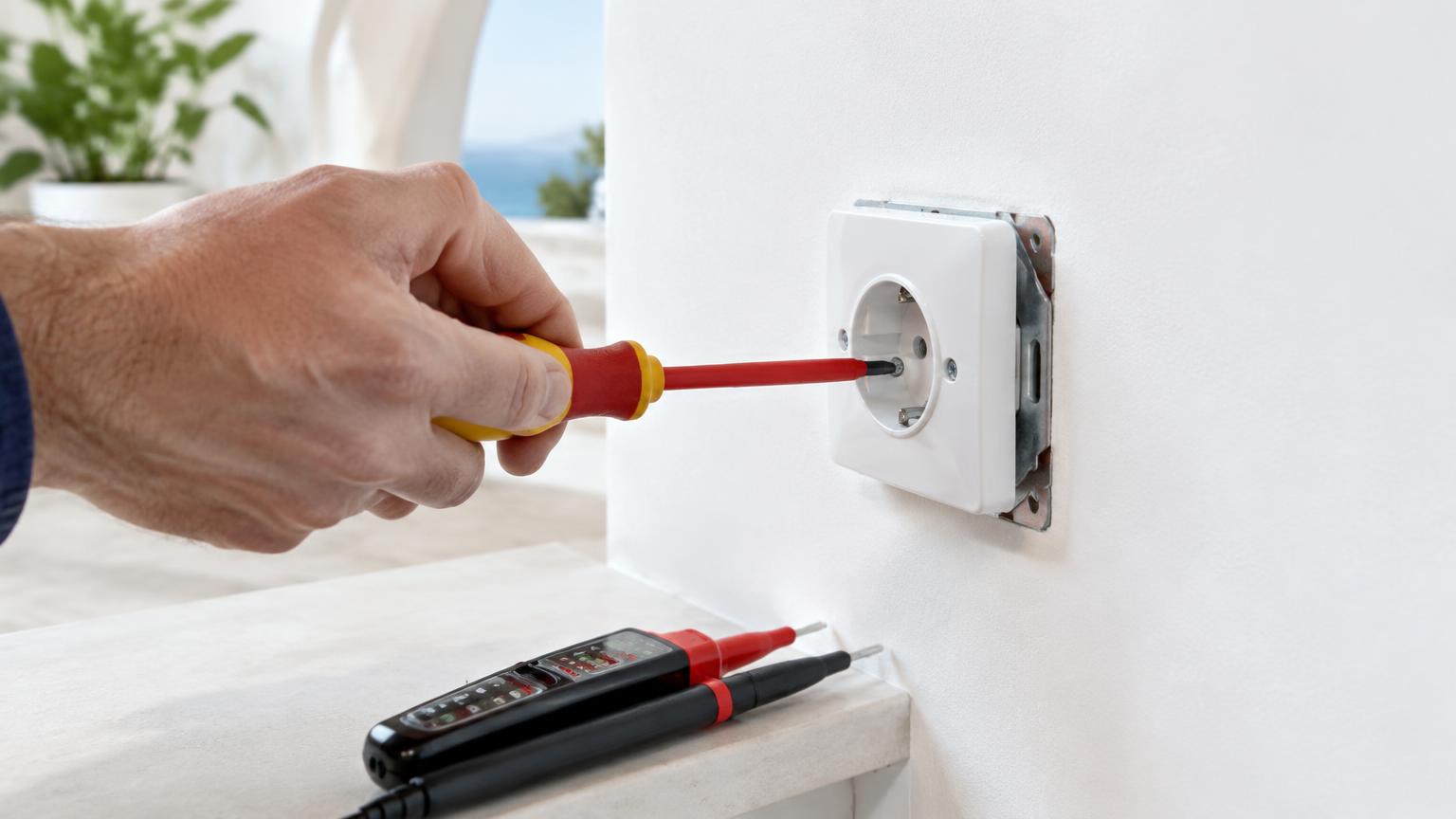
Switching your home to LED is about more than choosing bulbs with a lower wattage. You need the right brightness, a comfortable colour temperature and products that work with your existing fittings and controls. Start with an inventory, test one room and then roll out the changes across the property.
This guide explains how to choose LED bulbs and strip lighting, what to include in your shopping list and when to bring in an electrician. For homes on the Costa del Sol, outdoor heat, humidity and coastal exposure also deserve attention, especially on terraces and around exterior fittings.
1. Check your existing lights before buying replacements
Walk through the property and list each light fitting. Photograph accessible labels on bulbs, fittings and power supplies without opening electrical connections. Not every light can be converted simply by swapping a bulb.
For each fitting, record:
- The cap or base: E27, E14, GU10 or another type.
- The stated operating voltage and bulb dimensions.
- Whether the fitting is open or enclosed.
- Any dimmer, sensor or illuminated wall switch.
- Its purpose: general lighting, reading, food preparation or atmosphere.
GU10 spotlights commonly run on mains voltage, while many lamps with GU5.3 bases use a low-voltage transformer. Always read the label rather than identifying the supply by appearance alone.
Decide which fittings are worth keeping. With an integrated LED fitting, the light source may not be replaceable separately. Buy one sample bulb before ordering a whole batch: this lets you check the fit, glare and light quality in your own home.
2. Compare lumens, colour temperature and light quality
Lumens (lm) tell you how much light a bulb produces; watts tell you how much electricity it uses. As a rough comparison, a traditional 60 W incandescent bulb typically produced around 700-800 lm. Compare actual lumen figures rather than relying solely on replacement claims.
Colour temperature is measured in kelvin:
- 2700 K: warm light for bedrooms and relaxing spaces.
- 3000 K: a versatile warm white for living rooms, hallways and many kitchens.
- 4000 K: neutral white that can suit task areas, depending on personal preference.
Cooler light is not automatically better for visibility. Brightness, positioning and shadows matter too. Around 100-200 lux can be a starting point for general ambient lighting, with 300-500 lux on working surfaces. These are planning references, not universal requirements or a substitute for lighting design.
Choose a colour rendering index, CRI or Ra, of 90 or above where accurate food, fabric or skin colours matter. Also check the beam angle. Narrow spots highlight objects, but using them throughout a room can leave bright pools surrounded by dark patches.
A professional approach is to combine ambient and task lighting rather than solve every problem with a brighter ceiling bulb.
3. Check compatibility with dimmers and transformers
A bulb fitting into the socket does not prove it is suitable. Check voltage, dimensions, operating conditions and whether the manufacturer approves it for enclosed fittings. Trapped heat can shorten LED service life.
For adjustable brightness, you need a dimmable bulb and a compatible dimmer. Older controls designed for halogen lamps can cause flickering, buzzing or a very limited dimming range with LEDs.
Low-voltage spotlights need particular care. The existing transformer must be suitable for LEDs and for the connected load. Keeping it is not always possible, and checking or replacing hard-wired equipment is a job for an electrician.
Illuminated switches and some electronic controls can also cause flashing or a faint glow after switching off. Do not add improvised components to the circuit: have the cause identified first.
Practical tip: use matching bulb specifications within a single dimmed group. If you prefer smart bulbs, check whether they require a permanent power supply and decide how everyday wall-switch use will affect them. Smart bulbs are not generally intended to work behind a conventional dimmer unless explicitly approved.
4. Choose LED strips, aluminium profiles and power supplies
First decide whether the strip is decorative, under-cabinet task lighting or part of the room’s general illumination. A subtle decorative strip may not provide enough light for a kitchen worktop. Compare lumens per metre, watts per metre and colour temperature.
Indoor strips commonly use 12 or 24 V. At equivalent power, 24 V systems generally make voltage drop easier to manage, but you must still follow the manufacturer’s maximum run lengths and power-feed instructions.
A typical materials list includes:
- LED strip and compatible power supply.
- An aluminium profile suitable for heat dissipation.
- Diffuser, end caps and mounting clips.
- A compatible controller for dimming or colour changes.
- Cables and connectors sized by the installer.
Multiply the strip length by its watts per metre to calculate consumption, then choose a power supply with the manufacturer’s recommended spare capacity. Keep it ventilated and accessible for maintenance, not sealed permanently behind plasterboard or cabinetry.
Lay out the route before fixing anything. Cut only at marked points, avoid sharp bends and do not rely on adhesive where mechanical support is needed. Never run a powerful strip while it is still wound on its reel.
For bathrooms and outdoor areas, select protection appropriate to the location and exposure. A strip’s IP rating does not automatically protect its connectors, controller or power supply.
5. Plan each room and replace bulbs safely
In living rooms, combine general illumination with reading lamps. In kitchens, position task lighting so your body does not cast a shadow over the worktop; a diffused profile beneath wall units often works well. At bathroom mirrors, avoid relying only on a spotlight directly overhead.
For bedrooms, prioritise comfortable warm light and convenient controls. On Costa del Sol terraces, choose outdoor fittings suited to the actual humidity, salt exposure and operating temperatures.
For a straightforward bulb replacement:
- Have a compatible bulb, a stable stepladder and a separate light source ready.
- Switch off the electricity at the consumer unit, not just the wall switch.
- Verify that the supply is dead using a suitable voltage detector according to its instructions. A non-contact detector alone is not sufficient proof. If you cannot check safely, use an electrician.
- Allow the old bulb to cool and replace it without forcing the holder.
- Restore power only once everything is securely reassembled, then test the light.
Do not dismantle switches or touch conductors. Stop if you find scorched parts, damaged wiring or moisture. Take removed lamps to an appropriate collection point rather than assuming they belong in ordinary household waste.
6. Allow for the full cost and avoid common mistakes
Use these indicative ranges for initial planning, not as a fixed quotation. Prices vary with product quality, the condition of the installation and the area, as well as access and job complexity.
- Standard domestic LED bulb: approximately €3-€15 each.
- Dimmable or higher-specification bulb: €6-€25 each.
- White LED strip without accessories: €5-€25 per metre.
- Aluminium profile with diffuser: €8-€30 per metre.
- Power supply: €15-€70 each, depending on capacity and features.
- A simple upgrade of roughly 15-25 points using standard bulbs: around €60-€300 for materials only, keeping existing fittings.
For strip lighting, add profiles, power supplies, controllers, connections and installation. Compare quotes on a like-for-like basis and ask whether VAT, travel and disposal are included.
Common mistakes include buying by wattage alone, choosing cool white everywhere and leaving bright strips directly in view. Another is expecting a guaranteed reduction in the electricity bill: savings depend on the lamps being replaced and how long they run.
To estimate electricity savings, multiply the power reduction in kW by operating hours and your energy unit rate. Replacing existing efficient lighting will save less than replacing older incandescent or halogen lamps.
7. When to call a qualified professional
Bring in an electrician for wiring alterations, replacement of hard-wired transformers, additional lighting points or persistent flickering. Burning smells, unusual heat, tripping protective devices and moisture near electrical equipment also require professional attention.
In Spain, new electrical installations and extensions require an authorised installer and the appropriate electrical installation certificate, commonly called a boletín, under the REBT framework. The precise paperwork and procedure depend on the scope of work. Replacing a compatible bulb is not the same as extending an installation.
Ask for an itemised quotation identifying fittings, colour temperatures, controls, installation and any required documentation. During a larger refurbishment, settle the lighting layout before ceilings and fitted furniture are closed up: this makes access and positioning easier to plan.
If your property is on the Costa del Sol, ReformaClick can help you find renovation companies and request a quote with no obligation.
Frequently asked questions
Can I replace every halogen bulb with an LED?
Many can be replaced, but check the base, voltage, dimensions and compatibility with dimmers or transformers. Low-voltage spotlights may need more than a simple bulb change.
Should I choose warm white or neutral white at home?
Warm white usually suits relaxing spaces, while neutral white can work well for tasks. Different rooms can use different colour temperatures, but avoid distracting mismatches within one space.
Why does my LED flicker or glow when switched off?
Possible causes include an incompatible dimmer, an illuminated switch, the power supply or an installation fault. If it persists, arrange a check rather than attempting a wiring fix yourself.
Can LED strip lights be stuck directly onto furniture?
It depends on the strip and surface. Many products need an aluminium profile for heat management and reliable fixing. Follow the manufacturer’s instructions and keep the power supply ventilated and accessible.
Would you rather hire a professional?
Tell us about your project and we will connect you with renovation companies on the Costa del Sol. No obligation.
Get a quote