
Electrical Wire Colours in Spain: What Each One Means
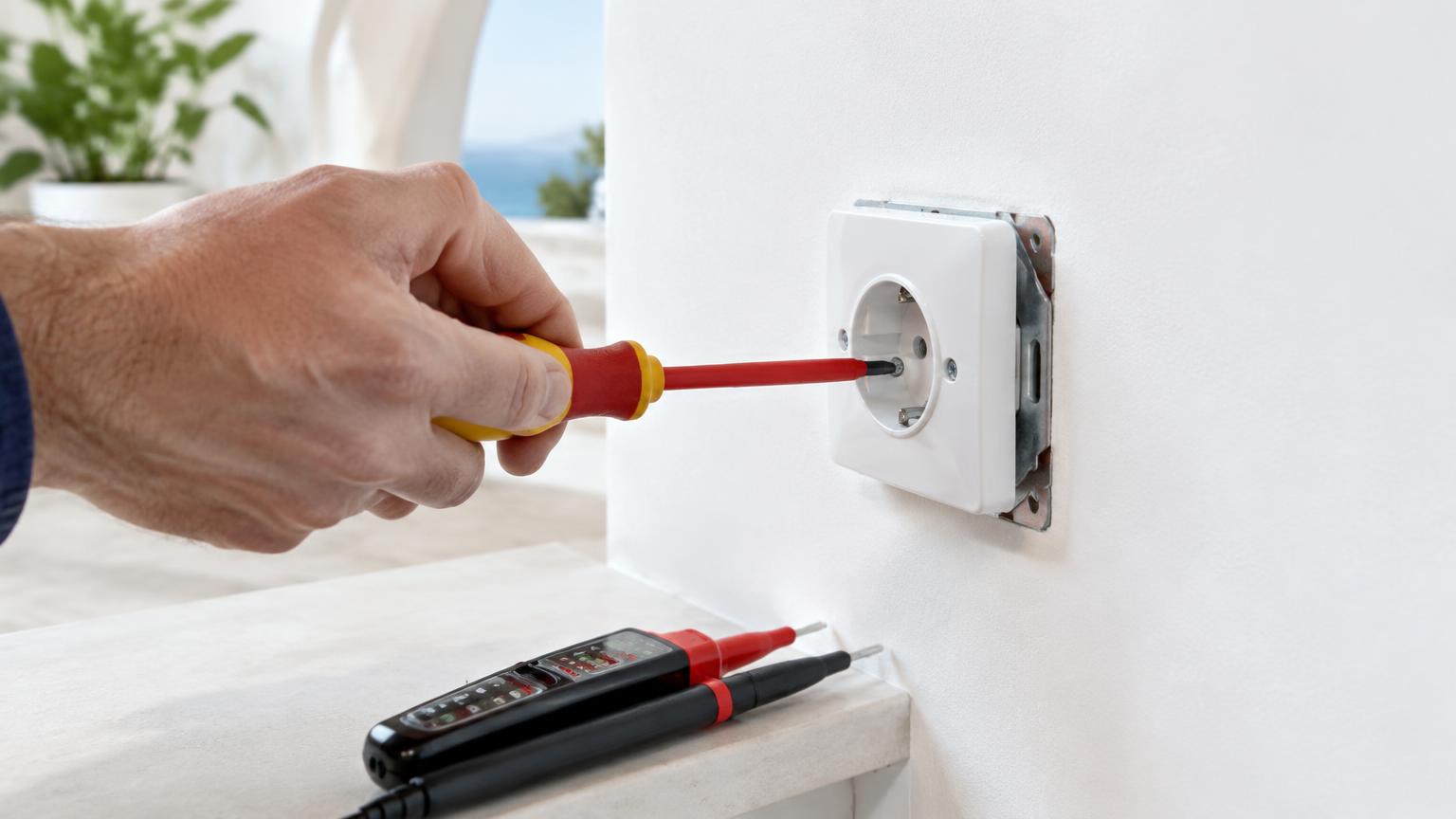
In a modern Spanish domestic installation, blue identifies neutral, green and yellow identifies protective earth, and brown, black or grey identifies line conductors, commonly called live wires. These colours describe the intended function of the wiring. They do not prove that an installation is correctly connected or safe to touch.
If you have uncovered unfamiliar wires while planning a lighting replacement or renovation, do not connect them by guesswork. Before any intervention, switch off the electricity at the consumer unit and verify that the circuit is dead using a suitable voltage tester. If you cannot safely carry out that verification, or the wiring is unclear, leave it to an authorised electrician.
The electrical wire colour code used in Spain
For modern low-voltage installations, the usual identification is:
- Green and yellow: protective earth. This colour combination is reserved for protection and must not be used as live or neutral.
- Blue: neutral. It carries current during normal operation in many domestic circuits and is not inherently safe to touch.
- Brown, black or grey: line conductors, which may be at a dangerous voltage relative to earth.
Terminal markings provide another clue. L normally means line, N means neutral, and PE, or the earth symbol, identifies protective earth. You may see these on light fittings, appliances and connection points.
However, a correctly marked terminal does not establish that the existing wire has been connected correctly at its other end.
Professional tip: treat insulation colours as functional labels, not as an electrical test. Even a green-and-yellow conductor can become dangerous if there is a fault or incorrect connection. Finding no voltage on a wire at one particular moment does not establish its function either.
Live, neutral and earth do different jobs
The line conductor, usually called live, supplies the appliance or fitting. Neutral completes the current path in many household circuits. Its voltage relative to earth is normally low, but faults, disconnections and wiring errors can make it dangerous.
Protective earth has a different purpose. It connects certain accessible metal parts to the protective system and is not intended to carry the appliance’s normal operating current. Under certain fault conditions, it helps protective devices disconnect the supply.
These functions are not interchangeable:
- Never use protective earth as a substitute neutral.
- Linking neutral and earth at a socket does not create a safe earth connection.
- An RCD, often labelled as a differential switch in Spain, does not remove the need for protective earthing where required.
A common mistake is relying on the wall switch. Switching a light off does not establish safe isolation. The switch may interrupt only one conductor, the wiring may be incorrect, or another circuit may be present in the same area.
What you may find at sockets, lights and three-phase circuits
A modern single-phase domestic circuit normally includes line, neutral and protective earth. However, which conductors appear in a particular box depends on its purpose and age. Three wires together do not automatically mean one of each.
Lighting arrangements can include switched lives and conductors between two-way switches. A switched live is still a line conductor, not a neutral. Several brown or black wires in a box cannot be distinguished by colour alone.
In three-phase circuits, brown, black and grey commonly identify the line conductors. Neutral, where provided, is blue, and protective earth is green and yellow. Colour does not verify phase sequence, which matters for some equipment.
Some Class II light fittings do not require an earth connection. They carry the double-square symbol and rely on their specified insulation design. This is a property of the fitting, not a choice made during installation. Follow the manufacturer’s instructions, and never cut off or repurpose an existing protective conductor at the lighting point.
Older properties and unexpected wire colours
Older homes, or properties renovated in stages, may contain unfamiliar colours, painted insulation and inconsistent wiring between rooms. There is no universal, safe conversion chart that identifies every red, white or otherwise unexpected conductor in an older Spanish installation.
For British residents, this is especially important: memories of historic UK wiring colours are not a reliable guide to a property in Spain. Imported equipment may also have its own clearly documented wiring arrangements, which should not be confused with the fixed installation.
Warning signs include:
- Brittle, cracked or crumbling insulation.
- Copper exposed outside a connection.
- Burning smells, dark marks or unusually warm accessories.
- An apparently missing earth or an earth conductor used for another purpose.
- Loose joints or connections held together only with tape.
Wrapping a wire in different-coloured tape does not solve an identification problem. Its function and condition must first be verified. If there is heat damage, sparking or smoke, stop using the affected point and isolate the supply only if you can do so safely.
A safe approach before any electrical work
A sensible homeowner’s check is about gathering information, not experimenting with wiring:
- Define the issue. Note whether it concerns a light, socket or wider renovation, and when the problem started.
- Record what is visible without dismantling anything. Photograph external damage, circuit labels and the fitting. Do not remove consumer-unit covers or expose wiring for a better photograph.
- Before intervention, isolate at the consumer unit. Prevent anyone from switching the supply back on. Solar panels, batteries or other supplies may introduce additional sources that need professional assessment.
- Verify absence of voltage with a suitable tester. This requires competence, including checking that the tester works before and after use. If you do not know how to do this safely, stop.
- Do not test possible connections by trial and error. Re-energising an uncertain circuit to see which arrangement trips a breaker is dangerous.
A neon screwdriver or non-contact voltage pen is not sufficient on its own to prove a circuit dead. Electricians commonly use an appropriate two-pole voltage tester. Do not improvise multimeter settings or probe connections.
Tools, materials and mistakes worth avoiding
To prepare for an electrician’s visit, you usually need only a torch, your phone and any appliance instructions. There is no reason to strip wires or buy connectors before the fault and circuit requirements are understood.
Professional work may involve a two-pole tester, insulated tools, wire strippers, suitable connectors and correctly specified cable. Selection depends on conductor size, conductor type, electrical load and installation conditions. Insulation colour does not tell you a cable’s current-carrying capacity.
Avoid these common errors:
- Joining wires simply because their colours match.
- Leaving exposed copper or joints outside a suitable enclosure.
- Fitting a higher-rated protective device to stop repeated tripping.
- Assuming household gloves or plastic-handled tools provide electrical protection.
On the Costa del Sol, terraces, gardens and damp locations deserve particular attention. Moisture and corrosion can damage connections even when the colours look normal. Outdoor accessories and enclosures must be suitable for their surroundings; an indoor fitting is not made safe outdoors merely by covering it with tape.
When to call an authorised electrician in Spain
Get professional help for inconsistent colours, missing earth connections, repeated tripping, heat damage or uncertainty about a conductor’s function. The same applies when moving sockets, adding circuits or updating older wiring. Recognising colours cannot establish insulation condition, earth continuity or correct operation of protective devices.
In Spain, new electrical installations and extensions require an authorised installer and the corresponding electrical installation certificate, commonly called a boletín, under the REBT low-voltage regulations. Documentation for other work depends on its scope and the applicable administrative requirements.
As a rough guide, a diagnostic visit with basic checks may cost €80–€200, while a localised correction may be €100–€350. These are indicative ranges and vary with material quality, existing condition and location. Emergency attendance, travel and additional repairs can alter the quote. Ask whether taxes and call-out charges are included.
If your property is on the Costa del Sol, ReformaClick helps you find renovation companies and request quotes without obligation. Explain the symptoms and share only photographs you can obtain without exposing yourself to electrical risks.
Frequently asked questions
Which wire is positive and which is negative in a Spanish socket?
Domestic sockets use alternating current, so the relevant terms are line or live, neutral and protective earth—not positive and negative. Colour conventions used for direct-current equipment must not be applied to household mains wiring.
Can a blue neutral wire give you an electric shock?
Yes. Neutral can carry current during normal operation and may be at a dangerous voltage under certain conditions. Never assume it is safe because it is blue. Isolation and proper verification of absence of voltage are essential before intervention.
What does a black electrical wire mean in Spain?
In modern wiring, black may identify a line conductor, a switched live or a conductor in a switching arrangement. Its colour alone cannot distinguish these functions. The circuit must be properly identified and checked.
Can I fit a light if there is no earth wire?
That depends on the fitting and the installation. A Class I fitting requires protective earthing and must not be connected without it. A Class II fitting does not need an earth connection, but it must be installed according to its instructions on a circuit that has been checked.
Would you rather hire a professional?
Tell us about your project and we will connect you with renovation companies on the Costa del Sol. No obligation.
Get a quote