
Bathroom Underfloor Heating: Types, Costs and Benefits
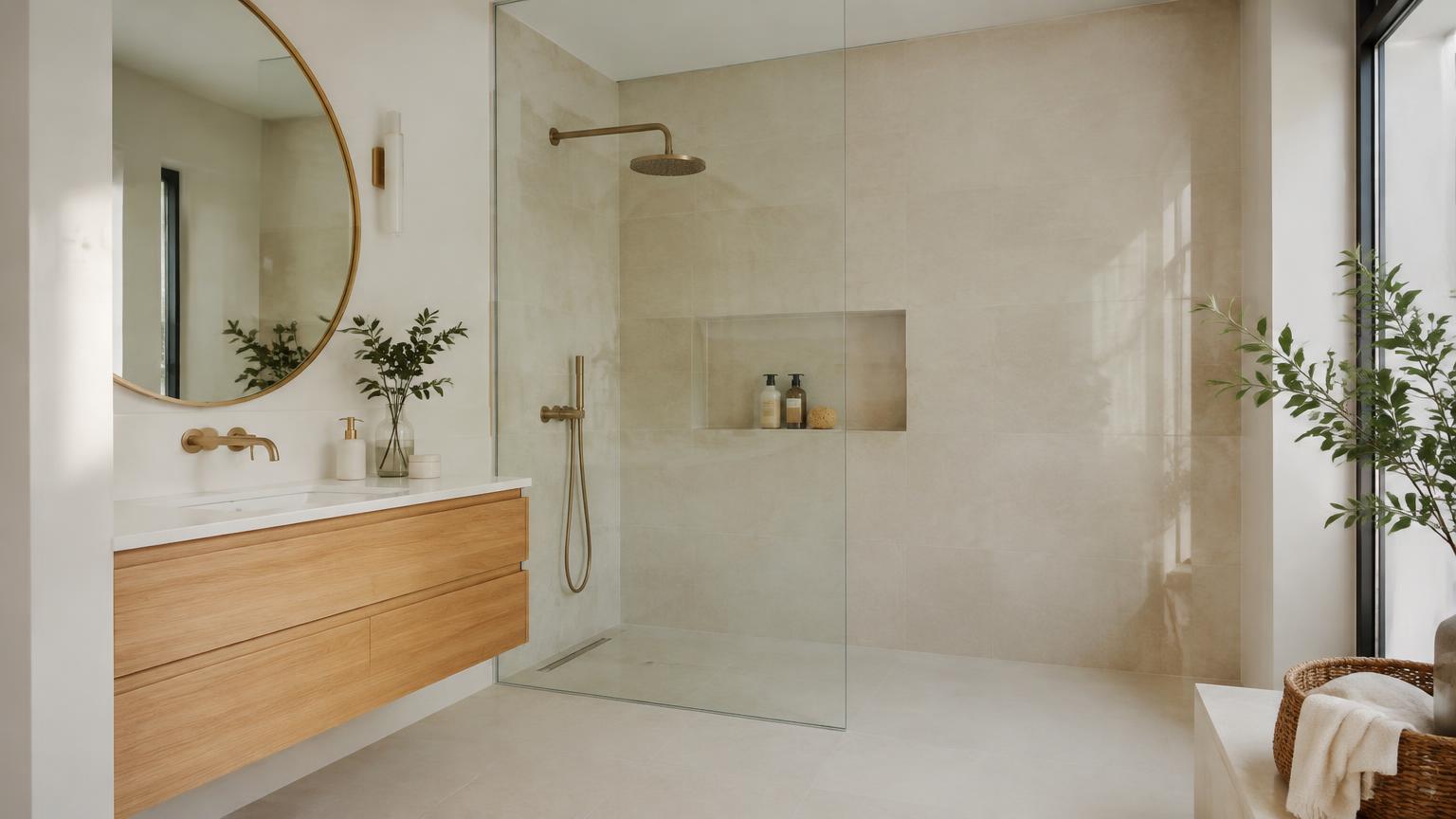
Bathroom underfloor heating is usually worth considering when you are already replacing the floor and want warmer tiles underfoot. Electric heating is often the simpler option for a single bathroom; water-based heating makes more sense when it forms part of a wider home heating installation.
However, a pleasantly warm floor will not necessarily heat the entire room. Your decision should account for heat loss, usable floor area, insulation and the depth available beneath the tiles. For Costa del Sol properties, where heating may only be needed during part of the winter, your daily routine matters as much as the installation price. Start by deciding whether you want occasional comfort or your bathroom’s main source of heat.
1. What bathroom underfloor heating can—and cannot—do
The biggest benefit is comfort underfoot, particularly with ceramic or porcelain tiles. Heat comes from a broad surface rather than a single radiator, and you may gain wall space if the system can meet the room’s heating demand without additional help.
- It keeps heating equipment out of sight.
- Timers allow you to match operation to your routine.
- It may help surface water dry, but does not replace ventilation or waterproofing.
- It makes early-morning bathroom visits more comfortable.
The drawbacks include installation disruption, a potentially higher floor level and difficult access if something fails beneath the tiles. Response time also varies: a thin system close to the surface behaves differently from pipes buried in a substantial screed.
A useful professional distinction is floor warming versus room heating. If your main aim is comfortable tiles, you may still need another heat source. A heated towel rail also serves a purpose that underfloor heating cannot replace.
2. Electric or water-based: which system suits your project?
Electric underfloor heating uses heating cables or mats beneath the floor finish, with a thermostat and floor sensor. It is often practical for a standalone bathroom renovation, provided the electrical supply and protection are suitable. A relatively modest installation cost does not automatically mean low running costs.
Water-based, or hydronic, heating circulates warm water through pipes connected to a manifold and compatible heat source. It generally makes more sense as part of a larger installation, particularly one designed around a low-temperature heat pump.
- One bathroom and limited daily use: investigate electric heating first.
- Whole-home renovation with wet heating: consider extending the planned system into the bathroom.
- Restricted floor depth: compare complete low-profile build-ups, not just cable or pipe thickness.
Do not assume every heating film sold online is suitable beneath bathroom tiles. The product must be expressly approved for the room, floor finish and installation method you intend to use.
3. When it is worth installing on the Costa del Sol
The strongest case is usually when the old floor is already coming up. You can then inspect the base, consider insulation and coordinate waterproofing without paying to repeat recently completed work. Removing a sound, newly tiled floor solely to add warmth may be difficult to justify.
Local conditions still vary considerably. A sheltered flat and a house with a bathroom above an unheated space can have very different requirements. Windows, orientation and exposure all affect comfort.
- Note when the bathroom is used and for how long.
- Decide whether you need occasional warm tiles or daily space heating.
- Check how well the existing heating already serves the room.
- Compare the project with a suitable towel rail or bathroom heater.
For an occasionally occupied holiday home, a simpler solution may be more sensible. In a permanent residence, the comfort can justify the expense without any promise of financial savings. Consider how the system will behave during short winter visits, too.
4. Floor depth, insulation and suitable finishes
Before choosing a product, ask for a drawing of the complete floor build-up. This should identify the base, any insulation, heating layer, levelling or uncoupling layers, waterproofing, adhesive and tiles. Their precise arrangement depends on the approved system; mixing products without checking compatibility can create problems.
Important checks include:
- The finished level at the doorway and adjoining floor.
- Drain height and falls in a level-access shower.
- The strength, flatness and condition of the existing base.
- The actual heated area, excluding fixed fittings where the instructions require it.
Ceramic and porcelain tiles generally transfer heat well. Natural stone can also work with suitable installation products. Vinyl, laminate and other finishes require explicit approval for underfloor heating and compliance with temperature limits.
Do not assume heating can run beneath every vanity unit, sanitary fitting or shower tray. Heating within a tiled shower needs a specifically suitable design, coordinated professionally with the waterproofing and applicable electrical safety requirements.
5. Installation stages, materials and safety
Plan the heating before tiling starts. Typical materials include the heating system, compatible insulation where appropriate, waterproofing products, suitable adhesive and flooring. Electric systems need controls and a floor sensor; water-based systems require pipework, a manifold and appropriate regulation.
The installer will use measuring and levelling tools, suitable trowels and electrical testing or pressure-testing equipment.
- Assess the base, available depth and heating demand.
- Map the heated area, controls and connections.
- Prepare the substrate and install the specified layers.
- Fit the heating and carry out the required checks before covering it.
- Photograph the layout for future reference.
- Lay the finish and respect curing times before commissioning.
Before any electrical work, isolate the supply at the consumer unit and verify that it is dead using a suitable voltage detector. In Spain, new electrical installations or extensions require an authorised installer and the relevant electrical installation certificate, often called a *boletín*, under the REBT. The electrical connection is not an improvised DIY task.
6. Indicative costs and what a quotation should include
For a small bathroom, an electric system might cost approximately €450–€1,200, covering heating components, controls and basic installation on a prepared base. Removing the existing floor, waterproofing, replacement tiles and alterations to the electrical circuit may be additional.
A water-based bathroom installation incorporated into a larger renovation could fall around €700–€1,800, excluding the heat generator and depending on the manifold connection. Creating a standalone installation with new supporting infrastructure can cost substantially more and may offer poor value.
These are indicative ranges that vary with specification, existing condition and location, not prices for a complete bathroom refurbishment. A square-metre rate can be misleading in a small room because controls and site visits represent a sizeable share of the bill.
Ask for separate allowances for preparation, heating, connections, controls, testing and finishes. Check whether VAT, waste removal and certification are included. Compare quotations using the same heated area and scope of work.
7. Running costs, controls and common mistakes
Energy use depends on installed output, actual operating time, insulation and temperature settings. For electric heating, a basic estimate is power in kW × equivalent hours running × electricity price per kWh. A thermostat cycles the heating, so scheduled hours are not necessarily hours drawing full power.
For sensible operation:
- Set the schedule around the floor’s observed warm-up time.
- Avoid unnecessarily high temperatures.
- Use the specified floor sensor and temperature limits.
- Ventilate effectively without leaving the bathroom continuously chilled.
Common mistakes include skipping the heat-loss assessment, counting the entire bathroom as available heating area and switching on early to dry tile adhesive. Drilling into the floor later without checking the recorded layout is another avoidable risk.
With water-based systems, ask about balancing and controls. Uneven warmth does not always call for a hotter water setting; it may indicate a circulation or commissioning issue. Neither system should be sold on guaranteed savings without a property-specific assessment.
8. When to bring in a professional
Get professional advice early if the existing floor construction is unknown, there are leaks, drainage needs altering or you want heating within a tiled shower. A small amount of clear floor space also warrants a proper assessment: it may not provide enough output to heat the room.
Electrical connections, protective measures and verification belong with an authorised installer. For water-based heating, a specialist should check the existing heat source, controls and circuits before proposing an extension. Never attempt DIY work on a gas installation; any gas-related alteration must be handled by an appropriately authorised professional.
Before accepting a quotation, request a site visit, an itemised scope and details of testing and commissioning. Keep the layout photographs, product instructions and installation paperwork for future maintenance or renovation.
If your property is on the Costa del Sol, ReformaClick helps you find renovation companies and request a quotation without obligation, so you can assess which approach suits your bathroom.
Frequently asked questions
Can underfloor heating be fitted over existing bathroom tiles?
Sometimes, provided the tiles are firmly bonded and the chosen system permits that substrate. The installer must assess adhesion, finished height, doors and waterproofing. Covering loose tiles or unresolved damp is not a sound solution.
Is electric bathroom underfloor heating expensive to run?
It depends on output, insulation, operating time and your electricity tariff. A small, well-controlled installation can limit energy use, but a low bill is not guaranteed. Ask for an estimate based on your proposed system and routine.
How long does a heated bathroom floor take to warm up?
There is no universal warm-up time. Heating close to the tiles usually responds faster than systems within thick screeds. Insulation, starting temperature and the floor finish also affect how quickly warmth reaches the surface.
Can underfloor heating replace a bathroom radiator?
Yes, if a heat-loss calculation confirms that the available floor area can provide sufficient heat. Otherwise, supplementary heating is needed. You may also want to retain a towel rail for hanging and drying towels.
What maintenance does bathroom underfloor heating need?
Electric systems generally need little routine maintenance, although controls and faults require attention. Water-based systems need appropriate circuit and heat-source servicing. Keep a record of the heating layout to prevent damage during later work.
Would you rather hire a professional?
Tell us about your project and we will connect you with renovation companies on the Costa del Sol. No obligation.
Get a quote