
Vinyl Flooring: Types, Pros, Cons and How to Fit It
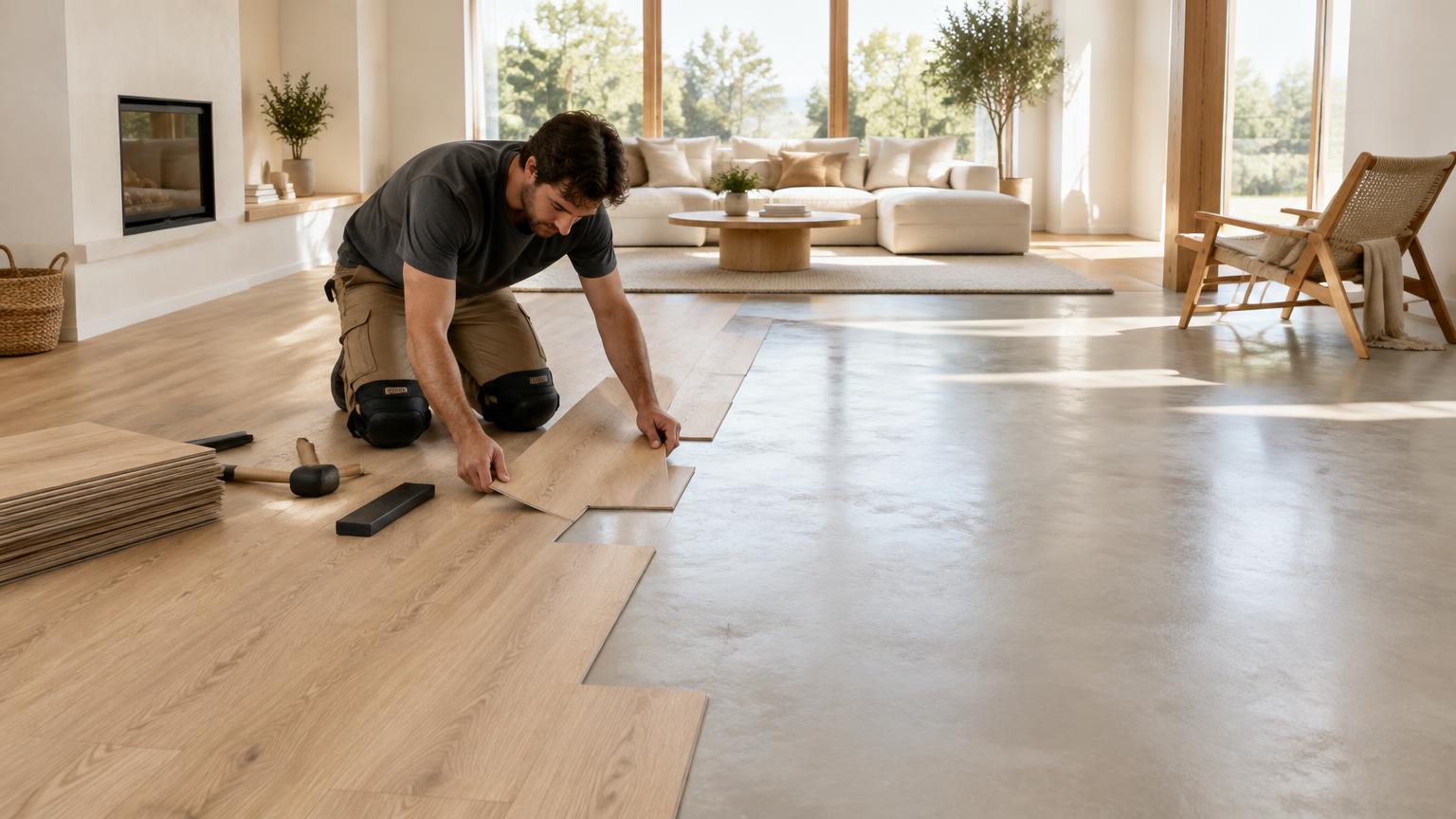
Vinyl flooring is a synthetic floor covering available in wood, stone and concrete-effect finishes. It comes as sheet flooring, tiles or planks, with glue-down, self-adhesive and click-fit options. It can be a practical way to update a home without removing the existing floor, provided the surface underneath is suitable.
The right choice depends on foot traffic, sunlight, moisture exposure and the quality of the subfloor—not simply the pattern you prefer. This guide explains the main options, indicative costs and the basics of fitting click vinyl, with particular considerations for homes on the Costa del Sol.
Vinyl flooring types: understanding the options
Product labels can be confusing because format, core construction and fitting method describe different things. A vinyl plank might be flexible and glued down, or rigid with a click joint.
- Sheet vinyl: supplied in rolls, it covers larger areas with fewer seams. Cutting neatly around fittings takes care, and adhesive requirements depend on the product.
- Luxury vinyl tile, or LVT: available in tile and plank shapes, commonly with wood or stone finishes. Flexible glue-down versions need a particularly smooth surface; click versions are also available.
- Rigid-core SPC vinyl: uses a mineral-composite core for greater rigidity. It still needs a flat subfloor and cannot bridge significant dips or ridges.
- Self-adhesive vinyl: has a ready-applied adhesive backing. It suits some small projects on smooth, clean, compatible surfaces, but poor preparation quickly causes problems.
Click flooring normally floats above the subfloor rather than being bonded to it. Glue-down products offer a low-profile finish but demand more installation skill. Always read the technical information for the actual product rather than judging by the category alone.
The main benefits and drawbacks
Vinyl generally feels warmer underfoot than ceramic tiles, is straightforward to clean and offers plenty of design choices. Its relatively low thickness can help when renovating over an existing floor. Damaged pieces may be replaceable, although click systems sometimes need dismantling from the nearest wall.
There are limitations worth knowing before you buy:
- Scratches are possible: grit, unprotected furniture feet and dragging heavy objects can damage the surface.
- Indentations can occur: concentrated loads are a particular concern with some flexible products.
- Heat matters: strong sunlight through glazing can affect unsuitable flooring.
- It cannot be sanded like timber: deep wear usually means replacing the affected pieces.
- Water resistance is not waterproofing: spills or leaks may reach the subfloor through edges and junctions.
For Costa del Sol homes, beach sand and sun-facing patio doors deserve special attention. Compatible entrance mats, furniture protectors and suitable shading help protect the finish. Check exposure limits before choosing flooring for a very sunny room or an enclosed terrace.
How to choose vinyl and budget for the work
Look at the use classification and wear layer, not just the overall thickness. A thick board is not automatically more resistant to surface wear. Busy hallways, pets and holiday rentals need a product rated for the expected use.
For kitchens and bathrooms, check that the manufacturer allows the application and explains the required edge details. Bathroom suitability does not automatically mean a product can go inside a shower. With underfloor heating, verify compatibility, permitted temperatures and the thermal resistance of the complete floor assembly, including underlay.
Typical indicative ranges per square metre are:
- Sheet or self-adhesive vinyl: €8–25/m² for materials.
- Glue-down LVT: €15–40/m² for materials.
- Click vinyl, including SPC: €20–55/m² for materials.
- Fitting on a prepared subfloor: €10–25/m².
- Subfloor smoothing or levelling: €5–20/m², depending on the work.
These ranges vary with quality, existing condition and location. Skirting, thresholds, removal, delivery and VAT may be quoted separately. Compare like-for-like estimates: saving on the flooring itself will not compensate for inadequate preparation.
Preparing the subfloor and gathering your tools
The base must be sound, dry, clean and flat within the manufacturer's tolerance. Flat is not the same as perfectly level: local dips, raised edges and abrupt changes are the main concern.
If laying over ceramic tiles, check for loose pieces and repair defects. Deep grout lines can show through flexible vinyl, so a compatible smoothing system may be needed. Do not fit over carpet or another floating floor unless the chosen system expressly allows it.
Your basic kit should include:
- Flooring, thresholds and skirting or suitable edge trims.
- Tape measure, square, pencil and a long straightedge.
- Spacers and the recommended fitting tools.
- A utility knife or cutting equipment suitable for the product.
- Vacuum cleaner, safety glasses, gloves and knee pads.
- Primer and smoothing compound where required.
- Approved underlay, only if specified.
Measure carefully and allow extra material for cuts, especially in awkward rooms or patterned layouts. Do not add another underlay beneath boards with an integrated backing unless permitted.
Trade tip: investigate damp before covering it. In older properties, do not sand or disturb flooring or adhesive suspected of containing asbestos; arrange a specialist assessment first.
How to fit click vinyl flooring step by step
The following is a general sequence, not a replacement for the instructions supplied with your flooring.
- Check the conditions. Follow the specified room temperature, humidity and acclimatisation requirements. If residual subfloor moisture is uncertain, have it measured before installation.
- Plan the layout. Calculate the first and last row widths so you do not finish with an impractically narrow strip. Check door clearance and changes in floor height before cutting anything.
- Lay underlay if required. Use the approved type. Thick, soft foam is not a substitute: excessive movement can damage the locking joints.
- Start the first row. Use spacers to maintain the manufacturer's expansion gap around walls, columns and pipe penetrations.
- Connect subsequent rows. Stagger end joints by the specified minimum distance. Reuse offcuts only where they meet the minimum length requirements, and never force a damaged joint together.
- Cut around obstacles. Support the material securely and cut away from your body. Some rigid-core boards require a saw and appropriate dust control rather than a simple score-and-snap cut.
- Finish without trapping the floor. Remove spacers and attach skirting to the wall, not the boards. Install movement or transition joints wherever the system requires them.
Do not pin floating flooring beneath fixed cabinets or kitchen islands unless expressly allowed. Glue-down vinyl follows a different process, including adhesive selection, working time and rolling; click-fitting instructions cannot be transferred to it.
Common mistakes and everyday care
The biggest mistake is expecting vinyl to hide a poor base. Unevenness can lead to visible marks, movement, noise and joint failure. Another is sealing edges indiscriminately: wet-room or bathroom details must suit the product without preventing necessary movement.
For routine maintenance:
- Vacuum or sweep regularly to remove abrasive grit.
- Use a well-wrung mop and an approved cleaning product.
- Avoid solvents, abrasive cleaners and steam unless specifically permitted.
- Wipe up spills promptly and investigate leaks.
- Fit compatible furniture pads and check that rug backings will not stain the surface.
If a joint opens, resist filling it with glue straight away. Look for damaged locking edges, an uneven base or something restricting expansion. Identifying the cause is more useful than hiding the gap, particularly where the same fault could affect neighbouring boards.
When it is worth hiring a professional
A clear, regularly shaped room with a properly prepared base can be a manageable DIY project. Professional help is sensible for damp problems, significant unevenness, stairs, large continuous areas or complicated junctions. Sheet vinyl and glue-down LVT also benefit from experienced fitting.
Ask for an itemised quotation covering preparation, flooring, installation, thresholds, skirting and waste removal. Establish how moisture and flatness will be checked, and who will handle door adjustments and transitions to adjoining rooms. If the work involves moving a gas connection, never attempt it yourself; use an appropriately qualified professional.
If your property is on the Costa del Sol, ReformaClick helps you find renovation companies and request a quotation without obligation. A site assessment can clarify the preparation needed before you commit to a particular flooring system.
Frequently asked questions
Can vinyl flooring be laid over existing tiles?
Yes, provided the tiles are secure, dry and sufficiently flat. Loose tiles need repairing and deep grout lines may require smoothing. Also check the finished height around doors and appliances.
Is vinyl flooring better than laminate?
It depends on the products and the room. Vinyl generally copes well with spills, while some laminates offer strong scratch resistance. Compare actual ratings, feel, sound and the conditions for use in damp areas.
Is vinyl flooring suitable for bathrooms?
It can be, if the manufacturer approves the use and the perimeter and junctions are correctly detailed. It does not replace waterproofing and should not be fitted inside a shower unless it forms part of a specifically designed system.
Can I fit vinyl flooring without removing all the furniture?
You may be able to work in stages if there is enough space, but furniture must be moved safely rather than dragged. Fixed items must not trap floating flooring unless the installation instructions allow it.
How long does vinyl flooring last?
There is no universal lifespan. Wear-layer quality, foot traffic, sunlight, subfloor preparation and care all matter. A commercial warranty should not be treated as a promise of how long the floor will remain in good condition.
Would you rather hire a professional?
Tell us about your project and we will connect you with renovation companies on the Costa del Sol. No obligation.
Get a quote